by Philippe Dufour
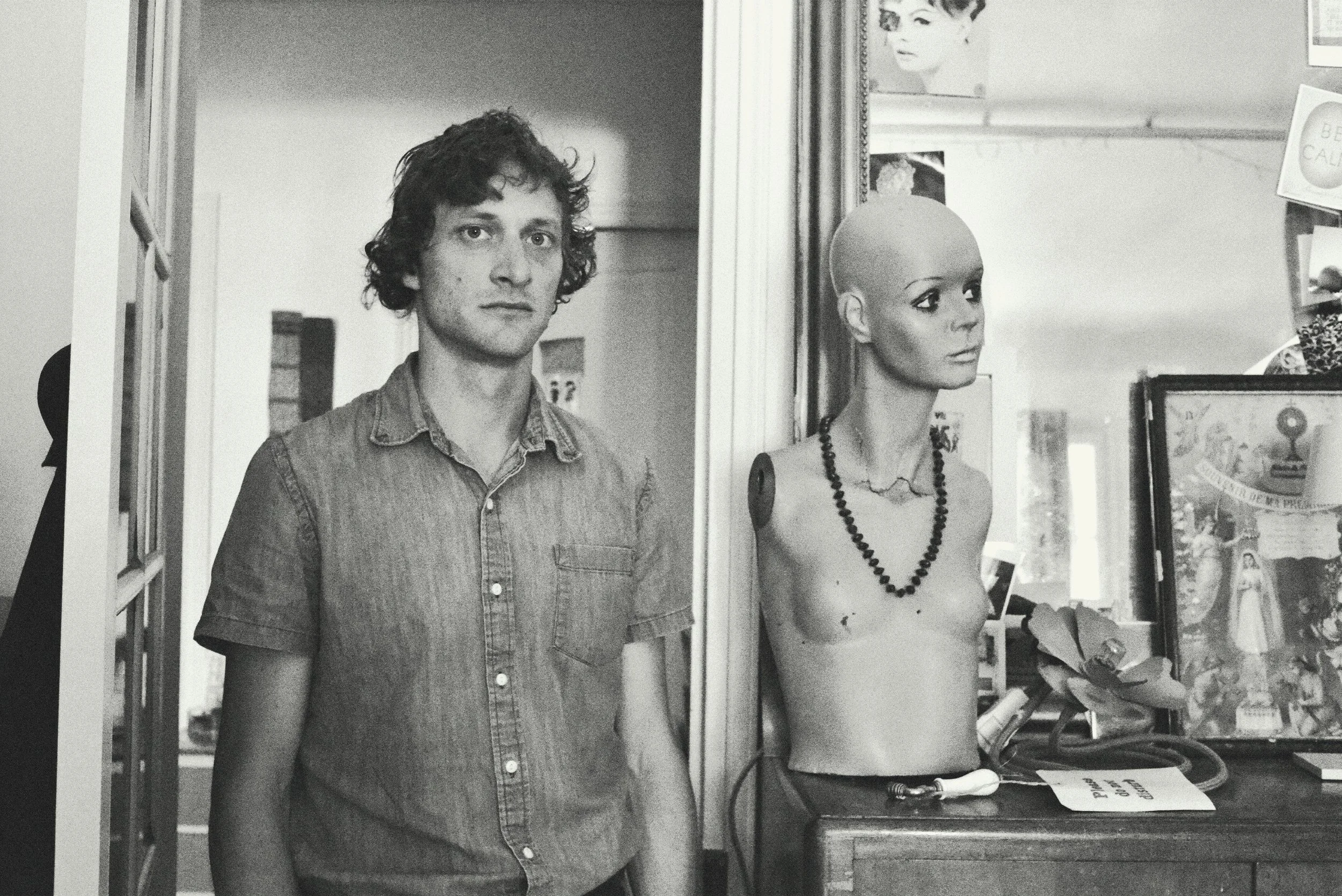
Kyle Morgan at the Scene of the Crime
- by Noah Harley
A fine nerve runs through Ghost of a Problem, Kyle Morgan’s second solo record after 2022’s Younger at Most Everything (Team Love Records). The album is a car swerving in and out of the passing lane, driver scanning the rearview mirror for the bloody mess he’s certain he has left behind. Hit-and-run or phantom tollbooth? All in the mind, or real as red? It’s an awkward thing about life, that you’ve got to live it in forward while trying to understand it in reverse. Still, dodging traffic on the PA Turnpike amidst a beat-up Elliot Smith record, the sparkling pick-up of the Cactus Blossoms, or the blissful, wide-open lane of an Emmylou Harris album, Ghost manages to gain some perspective.
Basic tracks were laid down in May and June of 2023 under engineer/ producer Ryan Dieringer of Welterweight Sound in New Paltz, NY, performed by the trio of Morgan on guitar and piano, Sean Cronin on bass and Rachel Housle on the drums. “We did a lot of the arranging together, the four of us, there in the studio,” Morgan wrote about the initial sessions. “Some I had more fleshed-out demos for, some we constructed together from the ground up, like with the title track, for instance. It was a really fun process. Less recreation of the demo and more collaborative, more defined by a band playing together, which is what I always want it to feel like.”
The result is a record that feels like a new bough grafted onto an old apple tree, deliberate in its arrangements and production while staying exploratory and organic in the actual playing. Dieringer is a longtime collaborator, and the three musicians have backed each other in and around NYC’s broader indie-folk scene for a decade now. Their familiarity is evident, you can feel everyone pulsing in harmony on the tracks. The bass and drums groove without showing off or feeling heady, handing a solid foundation to Morgan, who is a first-rate player in his own right. His guitarwork pivots easily from nervous electric riffs to rolling acoustic fingerpicking, and the album benefits more broadly from his intuitive sense of harmony. Morgan grew up singing in church choirs, and composed the string and horn sections himself.
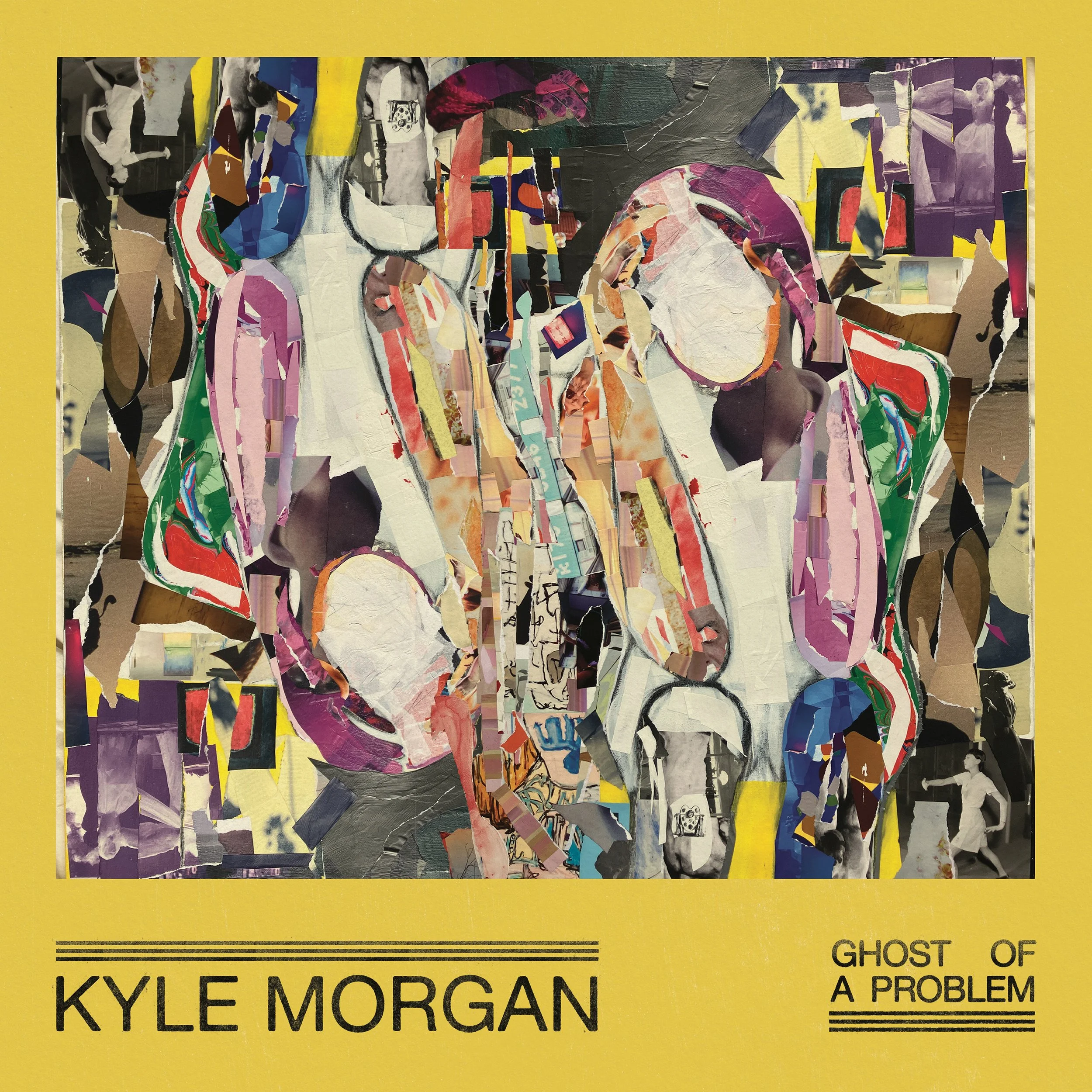
Ghost of a Problem has a definite pop sensibility—the production is clear and full of hooks, harmonies, and layered sound—but is equally at home in the sonic landscape of modern Americana, with a weird, throaty baritone guitar and drifting pedal steel gracing several tracks. Instead of settling in one camp or the other, the production weaves in between genres, now reminiscent of a stripped-down MJ Lenderman track, now of something closer to Lucinda Williams’ roadside bars. None of it feels precious or baroque; the production never gets the better of the song but stays focused on allowing the lyrics and vocals to unfold.
They do so in searching, wry fashion as Morgan stares down the canyons that mental illness has carved through his life. He sings about it from different angles, moving from anxious on “The Push” to manic / resigned on “Ghost of a Problem”, to sarcastic / exhausted on “Paper Towel Ballad”, which relates the impossible conundrum that a fallen paper towel presents for someone with OCD.
Morgan meets his ghosts directly but with artistry, writing in a confessional vein that avoids cliché and navel-gazing, balancing out internal impressions with real-world observations. No grand conclusions, no final victories or easy answers, just this car ride, just this movie date. He is a great poet of the incidental, moments of nothing-special that burn still in the memory, ember-like. Lyrics to three songs were written by Morgan’s ex, the well-regarded NYC poet Courtney Bush. They stand out for their abstraction, the imagery a little wilder and less intuitive than Morgan’s, but a good thematic match that broadens the world of the record without upsetting the foundation.
Lingering doubts, the flicker of former loves, breakdowns both mental and mechanical along a country highway—it’s murky terrain, so it surprises that Ghost of a Problem rings as clearly as it does: in the quality of its recording, in Morgan’s enunciation and the inventive meter of his singing. The clarity surprises at first, it feels naked or exposed by comparison to the gauzy world of so much modern music production and songwriting. On repeat listen, it turns out to be a searing kind of emotional honesty. Like rubberneckers at the scene of the accident, it’s hard to look but impossible to look away when Morgan simply states all those second-guesses and wished-for second chances, rather than ducking behind a wall of sound or impenetrable screen of allusions.
“So I released my grip on the hope of self-actualization,” Morgan wrote to me in the lead up to writing this. “Maybe this is as good as it gets. Songs started slipping out like a slow drip, Ghost, Where to Start, To Be Atoned, The Push. Songs sung from the outside of desire looking in.” Maybe. Maybe these songs are written from the outside of desire. Maybe it’s all said and done with. Maybe there is no accident in the rearview mirror. Or maybe these are songs sung from the eye of the storm, the center of the roadside fire, where the only thing left is the unburnable core at the heart of the matter.